GDR-Diaries
9 November 1989
9 November 1989 – I was still at the beginning of my career as a photographer, although I had been part of the team of permanent freelance photographers for STERN for several years. Looking back on my own, typically West German childhood, a trip there never even crossed my parents' minds – they had no relatives in the GDR. And even in later years, when I had already travelled as a young photographer in America, Africa and even the Soviet Union, nothing tempted me to travel to this country. The East German republic was light years away for me, a no-man's-land, so to speak. Dull, grey, stuffy. I belonged to a West German post-war generation for whom the division of Germany seemed out of the question. A German reunification was inconceivable and at the same time not even desirable.
Of all places, that's where STERN sent me. Of all mornings, it was the early morning of 9 November 1989 that marked the beginning of a journey that kept me on my toes for months. While many people were able to leave the GDR for the first time in their lives that day, I was probably one of the few who entered the GDR for the first time in their lives on that 9 November 1989. As the STERN team, together with editor Lisa Trunk, we accompany the then Prime Minister of North Rhine-Westphalia, Johannes Rau, on his way to Leipzig, where he was to open a major exhibition of Western artists on the evening of 9 November. Early in the morning, we flew to West Berlin and crossed Checkpoint Charlie with the diplomatic retinue, heading east, just a few hours before the fall of the Wall.


On his way to Leipzig, Johannes Rau met with Egon Krenz, the then Chairman of the Council of State of the GDR, in East Berlin. None of us, not even the WDR director Friedrich Nowottny who was travelling with us, had the slightest idea that this would be a day of world-historical significance when we had to wait for the politicians' conversation behind closed doors.

»As far as I know, this will take effect – immediately.« It was here that Günter Schabowski announced the opening of the Wall with his famous sentence a few hours later.
Johannes Rau had no idea what a momentous historical place it was where he held his press conference afterwards. I didn't know that world history would be made just a few hours later at this very desk, where I was kneeling disrespectfully with my wide-angle lens next to Johannes Rau, when Günter Schabowski announced the opening of the Wall at 7 p.m. with the famous sentence: »As far as I know, this will take effect – immediately.«
At this point, we had already been in Leipzig for a long time, unsuspecting.

»What are we actually doing here?«, Exhibition curator Klaus Honnef, artist Günther Uecker, Klaus Rinke in the early evening of 9 November in Leipzig
The opening of the exhibition Time Sign – Art and Culture from North Rhine-Westphalia took place in the historic town hall of Leipzig. But despite the large number of well-known artists who were present that evening, one got the impression that no one was really interested in the exhibition, in art. You could feel the historical significance of the moment, the political change was practically in the air, and everyone was more interested in: What will happen in the next few days, will it continue peacefully, or will the regime resort to weapons after all? The prominent cultural figures who had travelled there, such as Günther Uecker and Gotthard Graubner, or the exhibition curator Klaus Honnef, stood almost out of place in the room, wondering what it was all about at this moment.
The aforementioned press conference at which Günter Schabowski announced the opening of the Berlin Wall had already taken place. But no one had a telephone connection to Berlin; mobile phones or even smartphones did not yet exist. And while the rest of the world followed the global events breathlessly on television, Johannes Rau began his unsuspecting opening speech in the city where it all began with the Monday demonstrations.
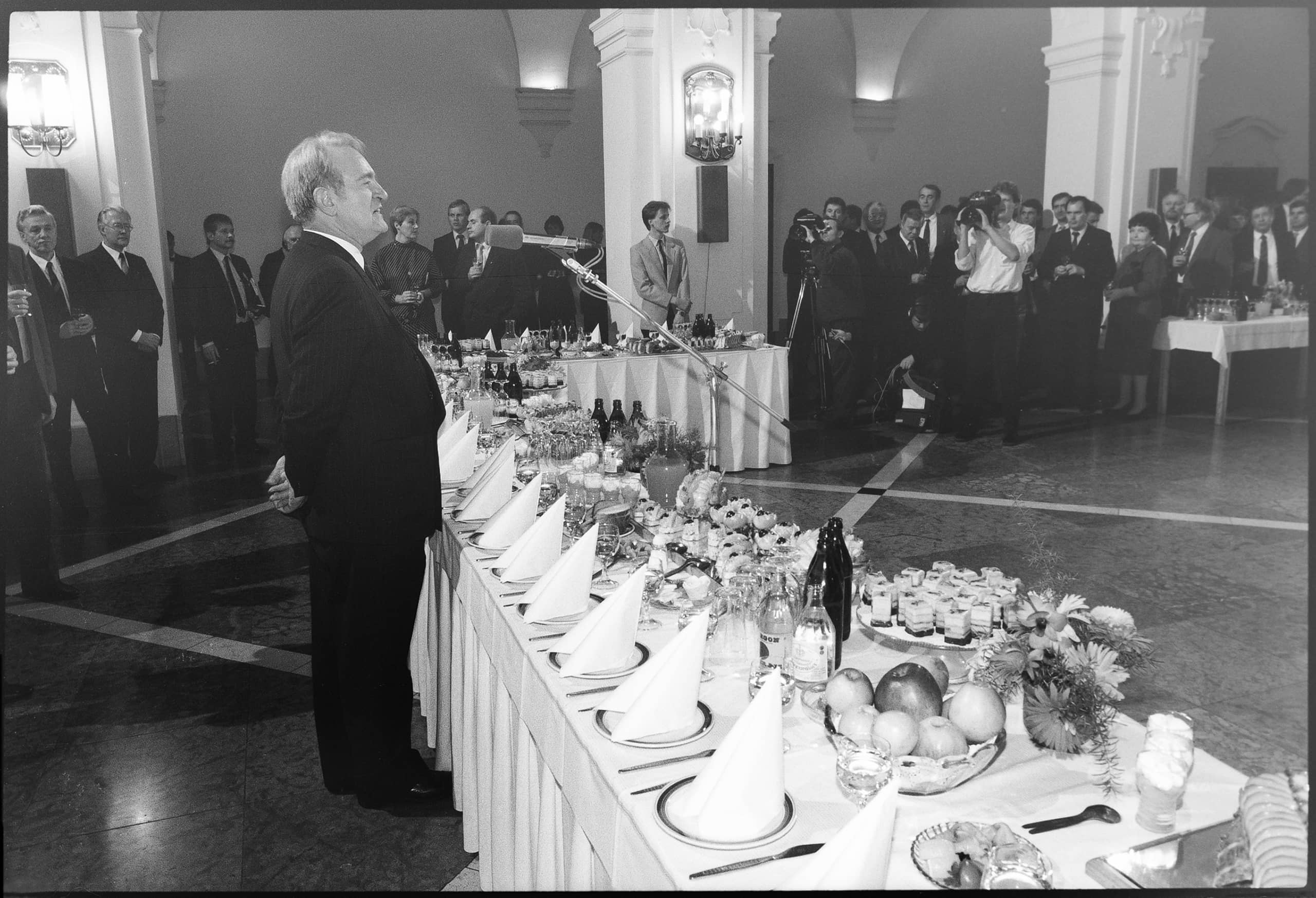
»I didn't know what to do. I didn't know what that meant.« During his speech, Johannes Rau is handed a note: the Wall is open!
Wolfgang Lieb, government spokesman for the Prime Minister Johannes Rau, recalled the situation: »After a few minutes, our head of protocol approached the speaker's desk and handed Rau a small piece of paper. The Prime Minister hesitated as he continued speaking, then stopped. He paused for a remarkably long time. Rau, who was usually so articulate, apparently no longer knew what to say.«
Ten years later, Johannes Rau himself spoke about this moment: ‘»I was giving a speech on cultural policy issues. A note was passed to me. The note said: The Wall is open. I didn't know what to do. I didn't know what that meant. I didn't know: should I finish the speech, should I shorten it, should I read this out? I will never forget that.«
Leipzig in the days after the fall of the Wall
Incidentally, Rau had probably intuitively decided not to read this information aloud. And so the audience at this exhibition opening remained in the dark. It was only later, when we all returned to the Merkur Hotel reserved for foreigners, that we were surprised by the reality of the situation when we turned on the western television: the Wall really was open.
My STERN colleague's attempt to register a phone call to discuss with the editorial office in Hamburg what we should do – whether to leave for Berlin or stay in Leipzig – predictably failed. After all, that night the whole world wanted to call their relatives and friends in the GDR...
We were only able to make contact the next day, and the editorial team decided that we should stay in Leipzig for the time being to follow the events of the next few days there.
December 1989: Right-wing extremists in the GDR
While I was in Leipzig during the days of the fall of the Wall during Johannes Rau's official visit, I came into contact with one of the press spokesmen of the GDR government. He then arranged for me to get permanent accreditation as a photojournalist for the GDR. Although the Wall had fallen, that did not mean that journalists could enter the country completely freely, and so this unlimited accreditation meant that I was booked by various magazines as a photographer to realize very different stories.
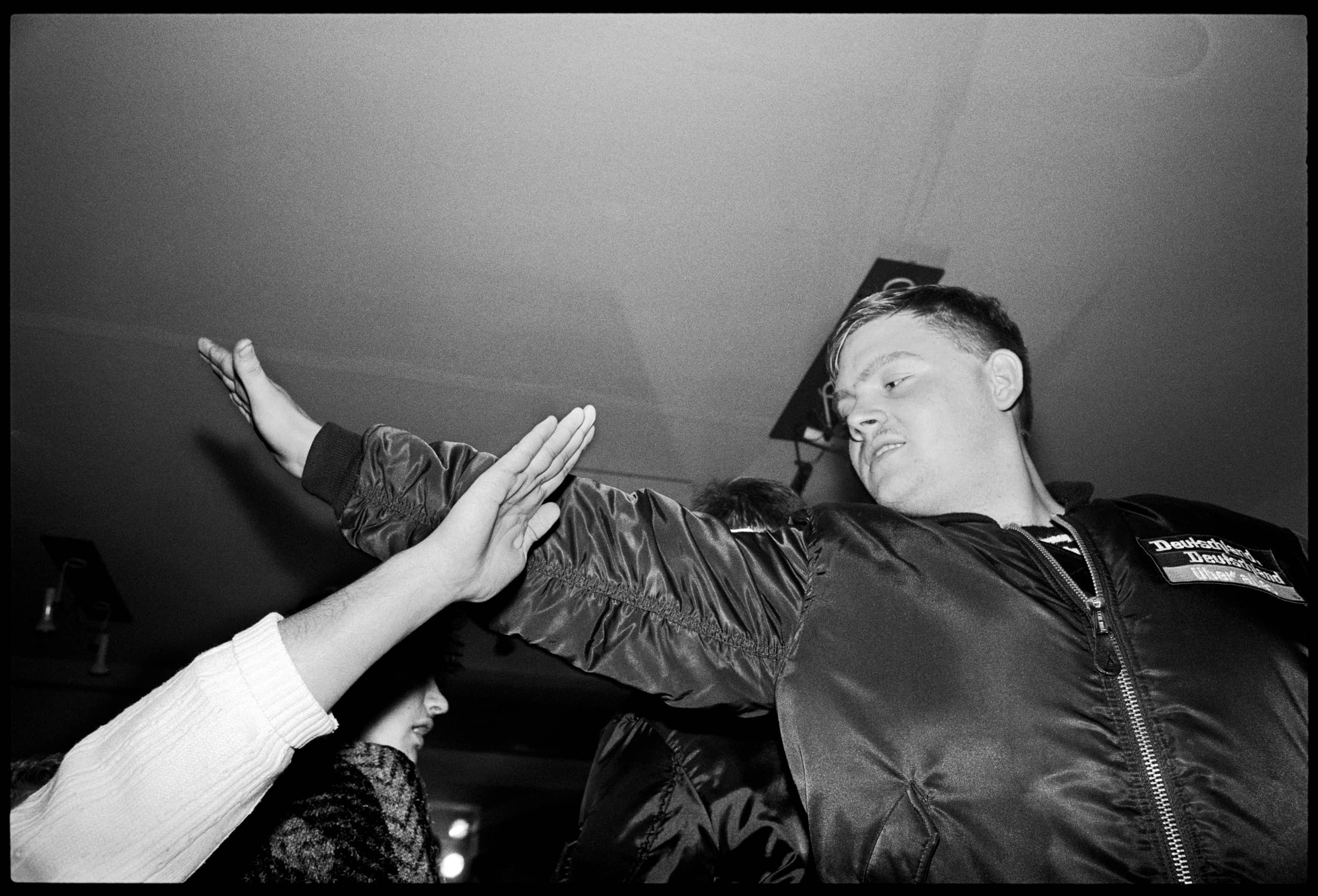
Right after the fall of the Wall, one topic was at the top of the magazines‘ agenda: right-wing radicals in the GDR. It was an incredible notion that in the »workers’ and peasants’ state«, which had made anti-imperialism and anti-fascism its watchwords, there could be right-wing radical, fascist ideas. With the help of two photographers from Erfurt, who I had met at the Leipzig Monday demonstrations, I visited various youth clubs in the Weimar area. I found what I was looking for in Apolda, a small town whose bleakness in December 89 I still remember well.
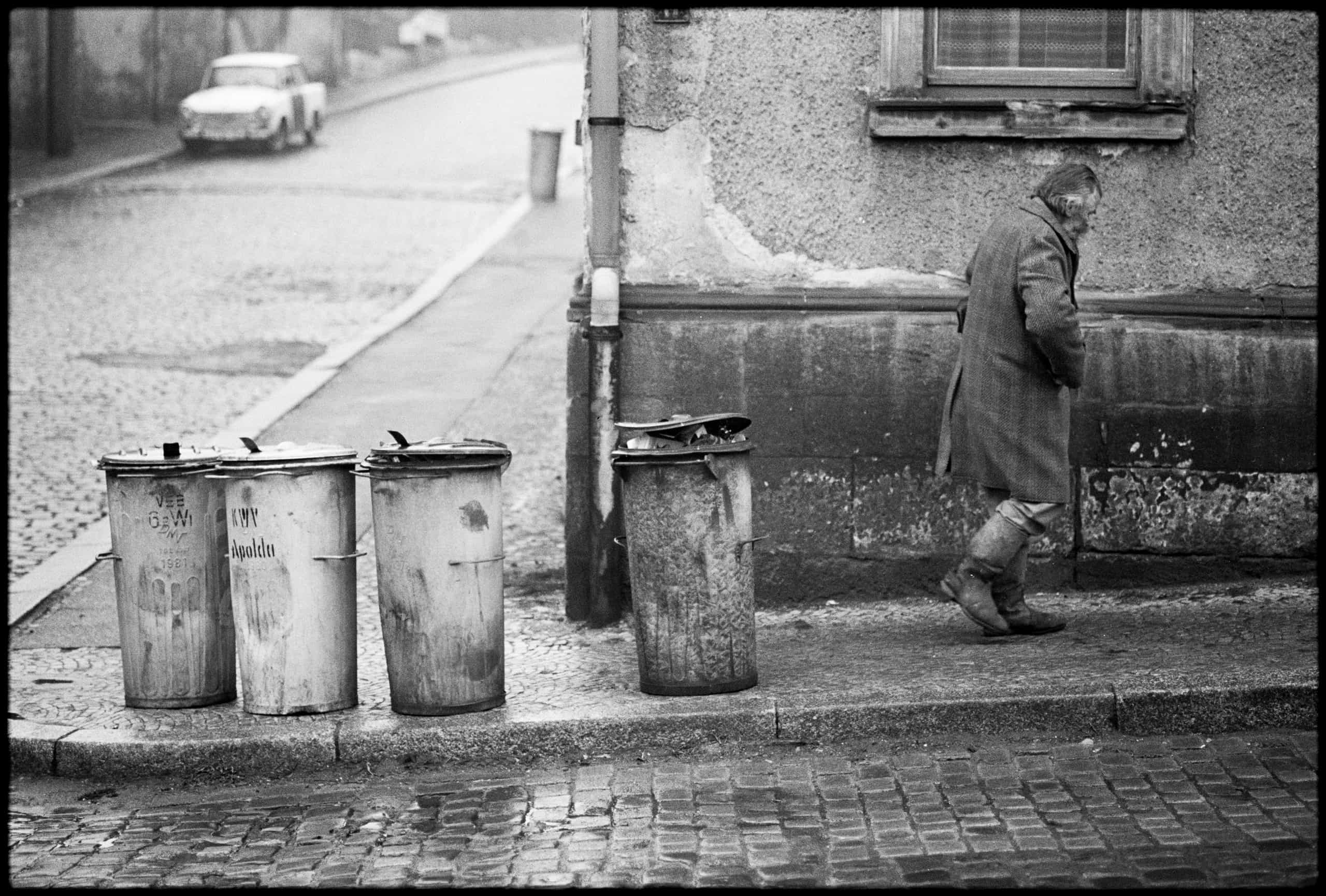
Apolda in December 1989
»Germany for the Germans«, »I am proud to be German«. Perhaps encouraged by my presence as a Western photographer – but definitely not provoked or staged by me – the first arms were soon raised in the Hitler salute.
December 1989: Andreas quarter in Erfurt
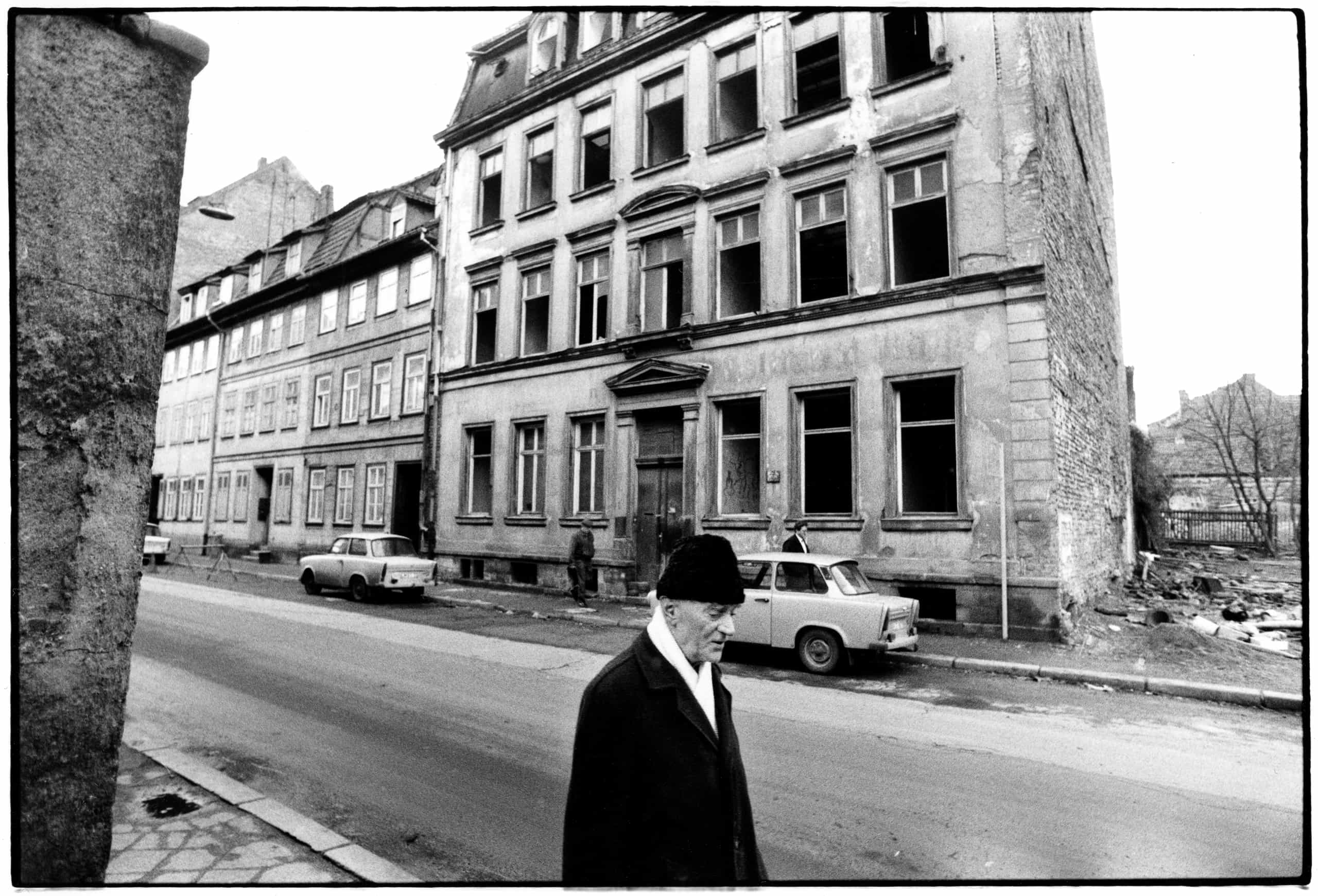
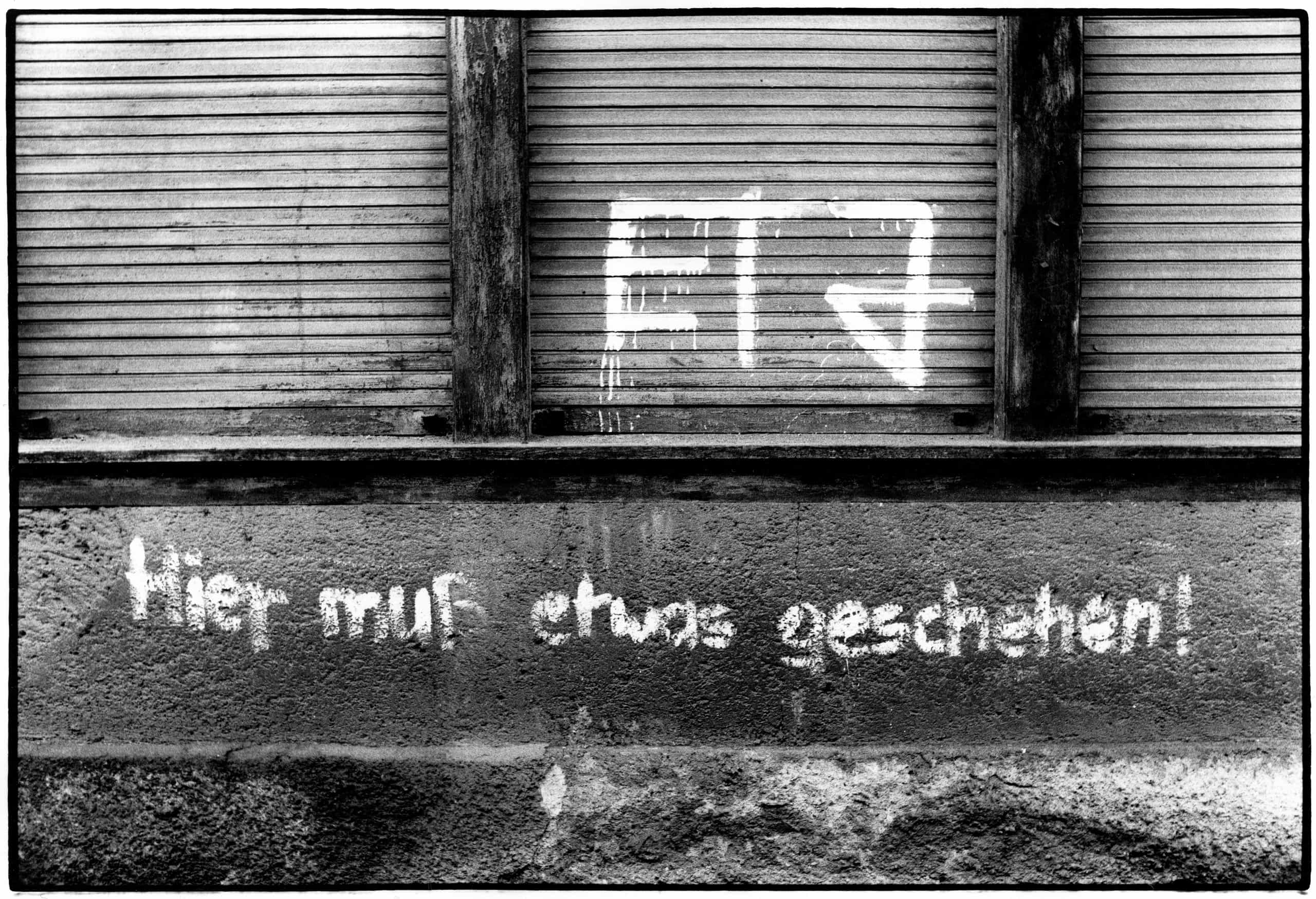
During my various research trips and reporting assignments in the Erfurt area, I repeatedly found myself roaming the Andreasviertel in the old town. The condition of this historic craftsmen's quarter with its half-timbered houses was disastrous. It left me with an impression similar to that after a bombing raid – entire streets had been destroyed, falling into disrepair and becoming uninhabitable. I was told that a complete demolition had been planned since the 1960s in order to build a large ring road with prefabricated concrete tower blocks.
In the meantime, the district, which is now a listed building, would be destroyed by a so-called piecemeal demolition: in winter, the roofs would be removed to make the half-timbered houses uninhabitable due to the moisture that would then penetrate.
The fall of the Berlin Wall and the economic collapse of the GDR were, so to speak, the salvation of the historic district. It was redeveloped in the following years and became one of the most popular residential areas in Erfurt today.
When I showed pictures of the Andreasviertel, among many others, at an event at our university marking the 25th anniversary of the fall of the Berlin Wall, it sparked a major controversy: A colleague who had grown up in the GDR accused me of presenting a completely one-sided and distorted image of reality. I can only reply that, in this case too, I have remained true to my motto of showing what I see and what strikes me, even if this may of course be subjectively influenced.
But the ruinous decay – and in some cases the deliberate destruction – of houses and buildings in the GDR was more striking and significant than in almost any other country I have visited.

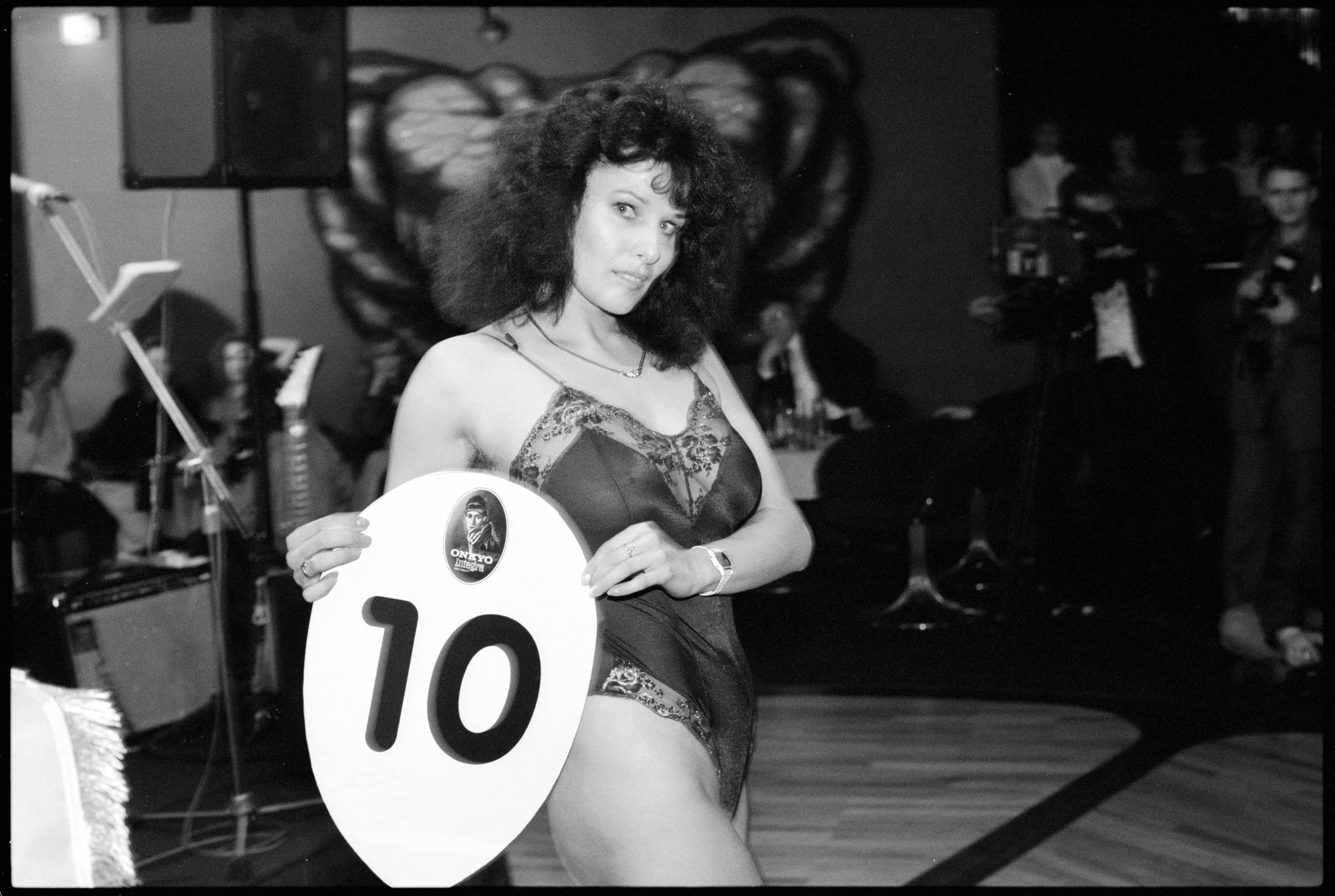
February 1990: First beauty contest after the fall of the Berlin Wall in Leipzig
The text written by my colleague Andreas Borchers for STERN at the time:
Their names are Ines, Katrin, Simone and so on. 51 young Saxon women in one-piece swimsuits, bikinis or bodystocking strut across the mirrored dance floor of the nightclub in the Hotel »Merkur«. They are vying, breasts out, stomachs in, for the promised beauty prize: a week's holiday on the Côte d'Azur for ‘»Miss Leipzig«. And many dream of the promised career as a model. Jochen Schneider, president of the »Media London – Black Bulli« modelling agency, is responsible for the spectacle. He and five other entrepreneurs from Karlsruhe, who sit on the jury, seem like members of the butchers' guild choosing the most beautiful side of pork in Karlsruhe. They seem dissatisfied.

The night before, the clan had invited all the applicants to the night bar, quite informally. »After two minutes,« says 23-year-old quality controller Uta Müller, »there was a brotherly kiss, and then the hotel key was waved.« The young woman declined with thanks, like many others.
The beautiful plan to financially exploit the GDR dummies also failed. Mr Schneider had drafted a »very clean« contract: the 20-year-old pastry chef Diana Klöthe took a close look at the document. It then became clear that she was supposed to sell herself to the Schneider agency as an unspecified »model« for almost a year. Remuneration? – That remained unclear. Like most of the other women and girls, she refused to sign, although Schneider protested: »I just want to help. I have them legally protected, for example from porn publishers. The GDR girls are so naive.« And the world is so bad.
From my side, I should still mention that the whole thing ended in a kind of fight. I can't really remember who was fighting whom, but there were enough red-light characters from the West who had travelled there for that.


On assignment for business magazines
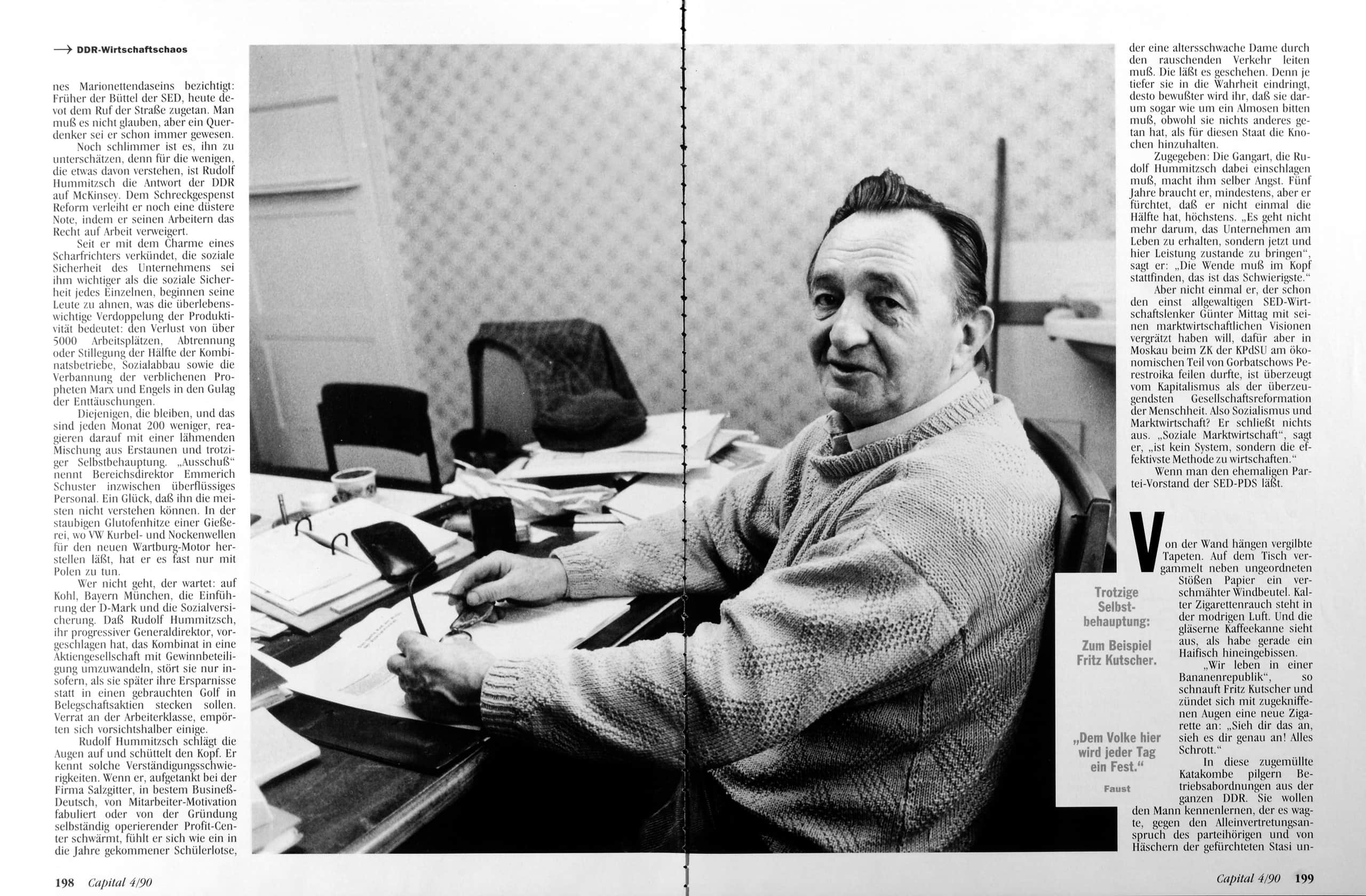
My previously mentioned unlimited work permit in the GDR brought me a wide range of assignments, including from magazines such as CAPITAL, MANAGER MAGAZIN and WIRTSCHAFTSWOCHE. After all, everything in this country had suddenly become interesting for the Western media.
The production conditions at the Robotron factory in Erfurt or the VEB Kombinat Rundfunk und Fernsehen (RFT) in Staßfurt seemed to have been left behind in a different time.
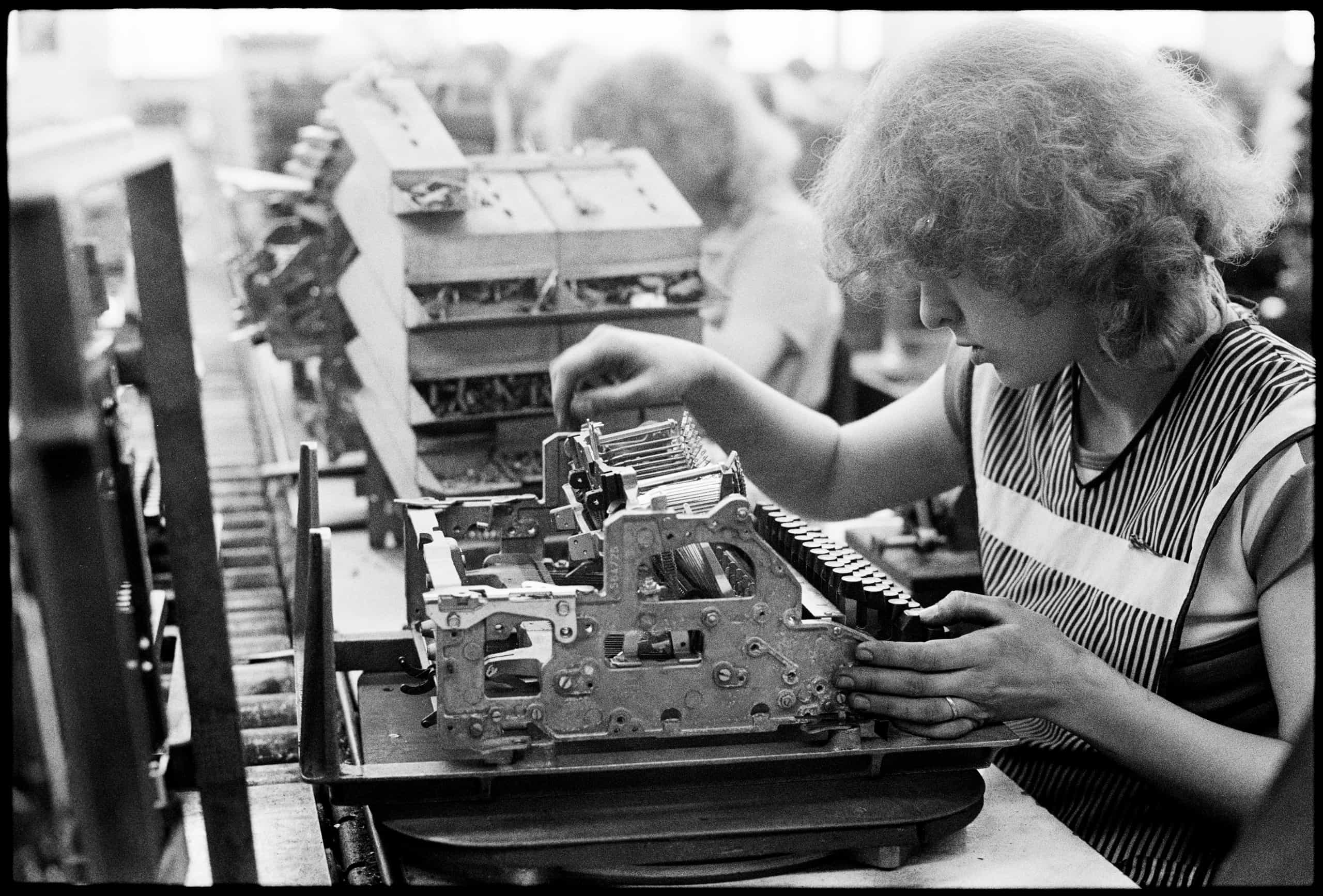
Robotron typewriter factory in Erfurt, December 1989
After the fall of the Berlin Wall, everyone was asking themselves: What comes next? And, depending on their political standpoint, of course: How should it continue? Are there perhaps alternatives to planned and capitalist market economies after all?
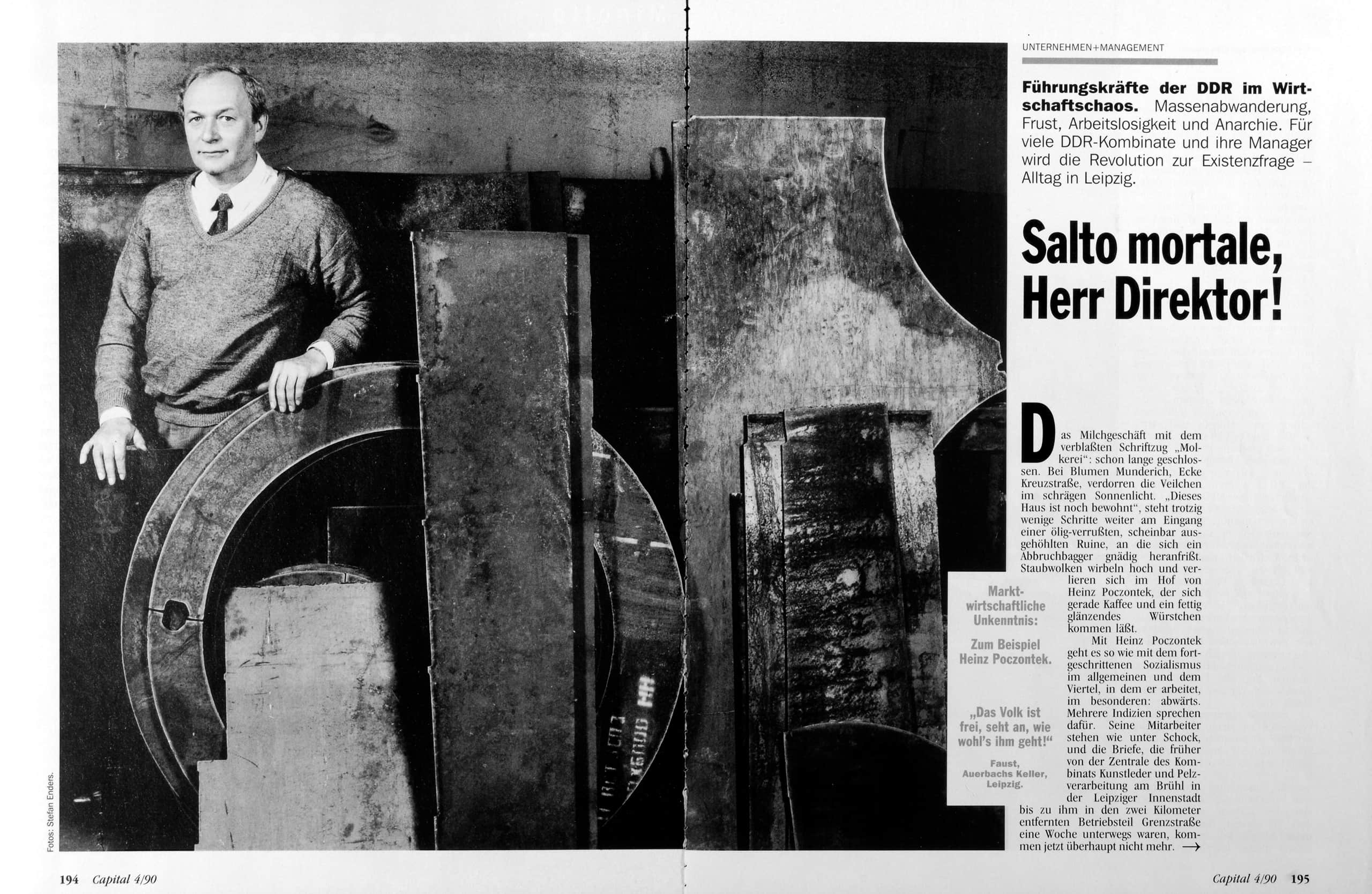
My work took me to many Eastern European countries, but of course especially to Leipzig and Dresden. Salto Mortale Herr Direktor was the perfect title for a major report in Leipzig that looked at the future of the former combines and their managers so soon after reunification.
East Berlin 1990
In 1990, the way to the GDR always led through Berlin – and usually by plane. Intercity Express trains were not yet available, nor was an appropriate rail network. And the general ecological awareness regarding domestic flights was also different back then. (In 1991, I even photographed a story about the so-called Beamtenshuttle: Public servants from Bonn were flown from Cologne-Bonn Airport to Berlin-Schönefeld and back again in the evening by a special air force flight service for their work in East Berlin.)

On the way through East Berlin, you could feel the changes in world politics with almost every step in those days. One day in March, on my way to the Oderbruch, I saw the huge quadriga on the Brandenburg Gate being dismantled as I drove by. Everything was in disarray during those days, almost anarchic. I simply parked my rental car at the side and found the entrance to the staircase. Nobody was interested in or bothered by the fact that I was then climbing around on the Brandenburg Gate, equipped with several cameras.


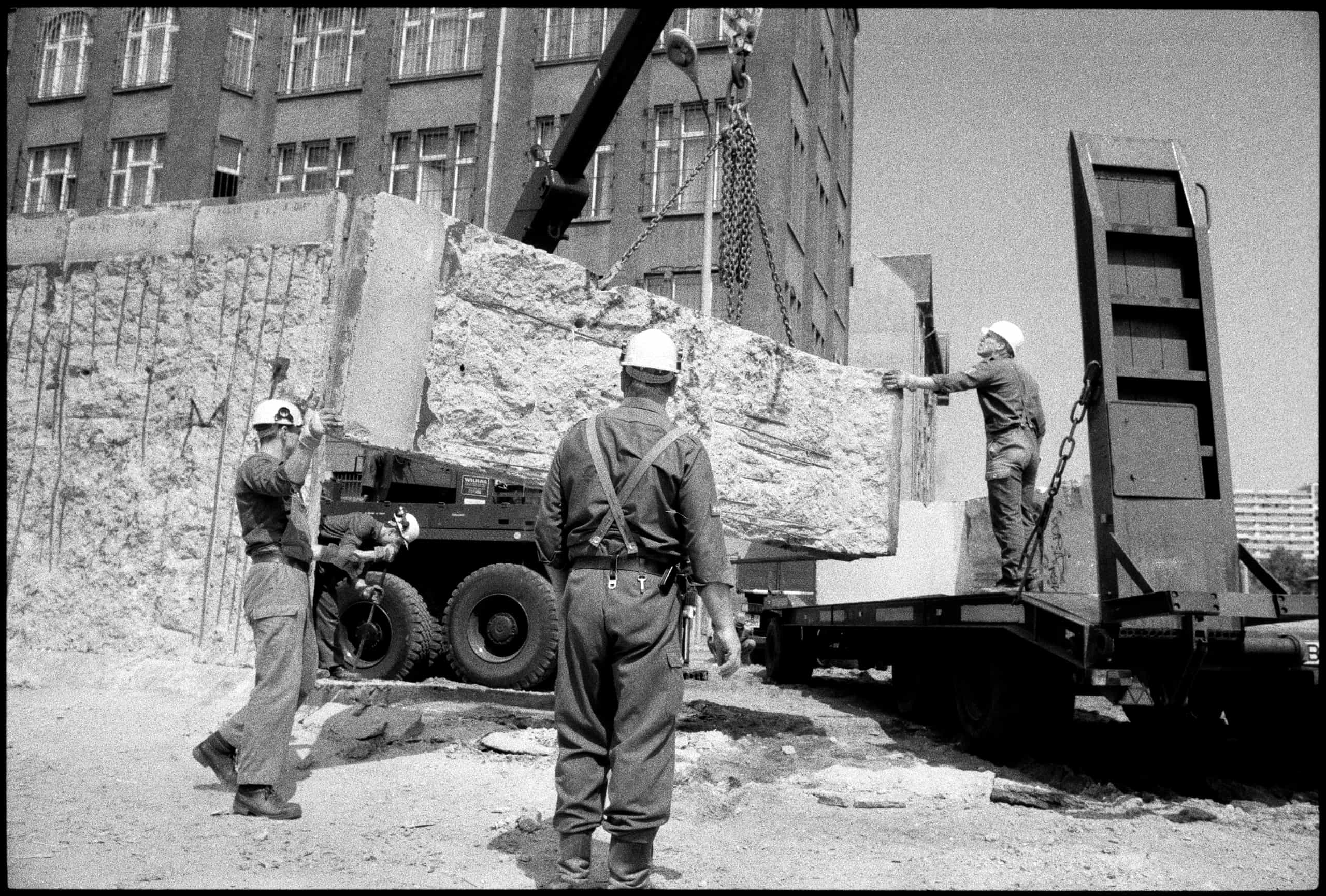
In June, I had just returned from an assignment in Senftenberg when the Wall was dismantled in Berlin-Mitte. There was something symbolic, something positively peaceful about it: seeing the four policemen standing together and chatting where the Wall had just been demolished. You have to look very closely to see which ones are from the East and which ones are from the West.

March 1990: First free Volkskammer elections
On 18 March 1990, the first free election of the GDR People's Chamber took place. However, it was also the last, as Germany was reunified six months later. I was supposed to accompany the Düsseldorf-based old rockers of the 60s band The Lords, who were invited to a concert in Weimar on election night.
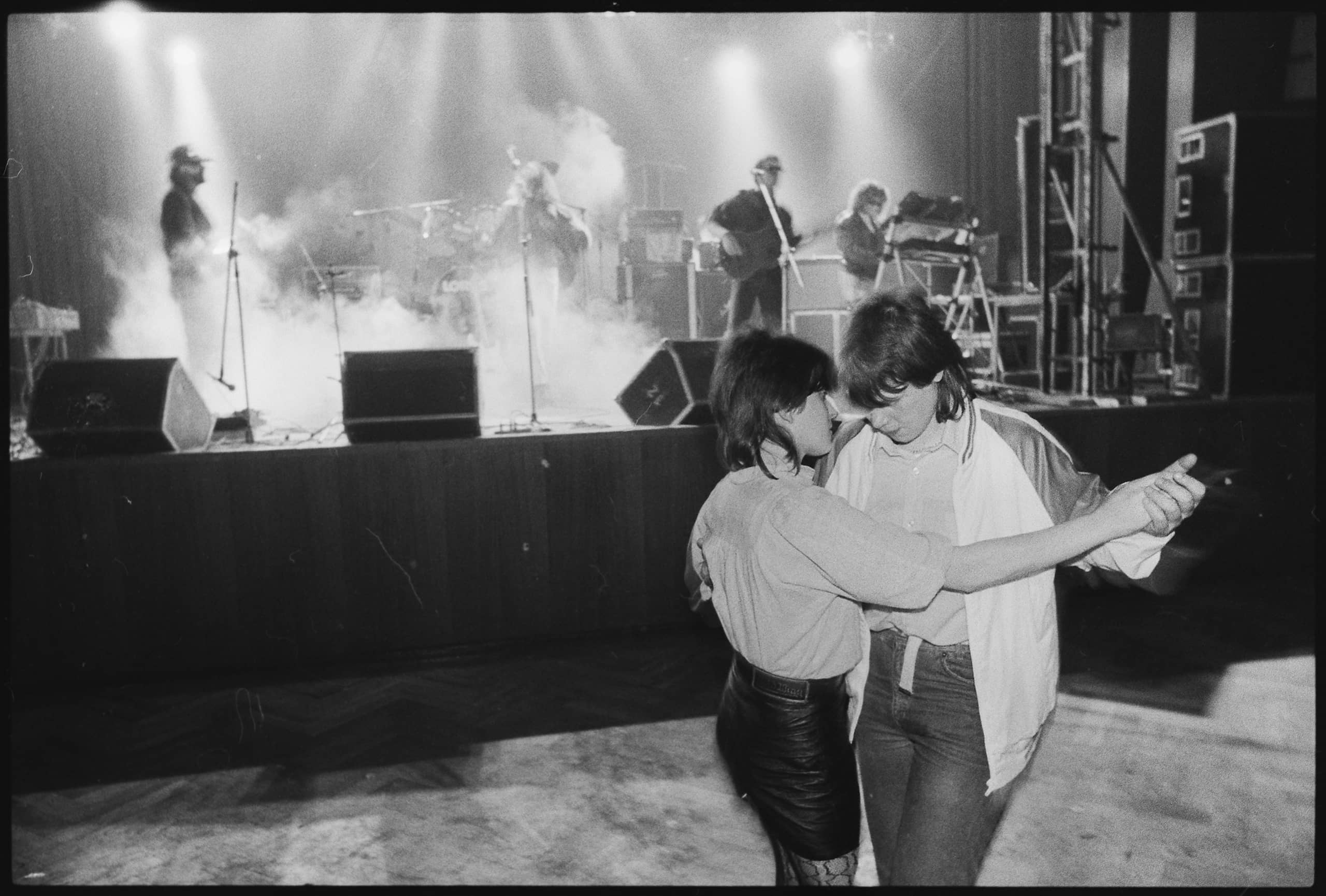
The evening and the concert ended on a note as melancholy as the visit for the Lords to the Goethe and Schiller monument in the centre of Weimar had begun euphorically: everyone was stunned and dismayed by the unexpected landslide victory of the CDU in the first free elections in the GDR. Had the voters fallen for the promises of Helmut Kohl and his vision of »flourishing landscapes«?
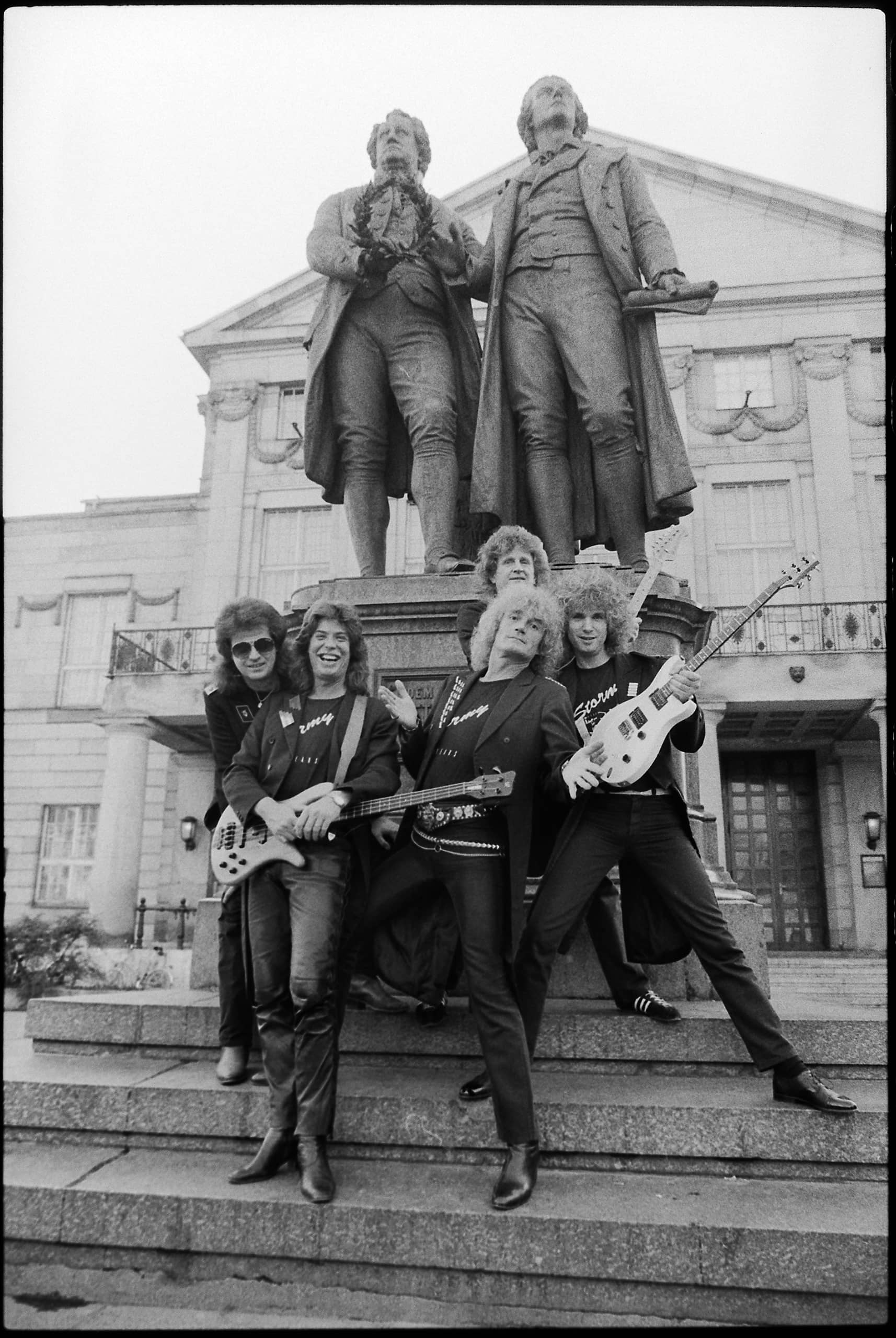
A 1960s revival: The Lords from Düsseldorf on the occasion of the first free parliamentary elections in Weimar
July 1990: Monetary union in Magdeburg
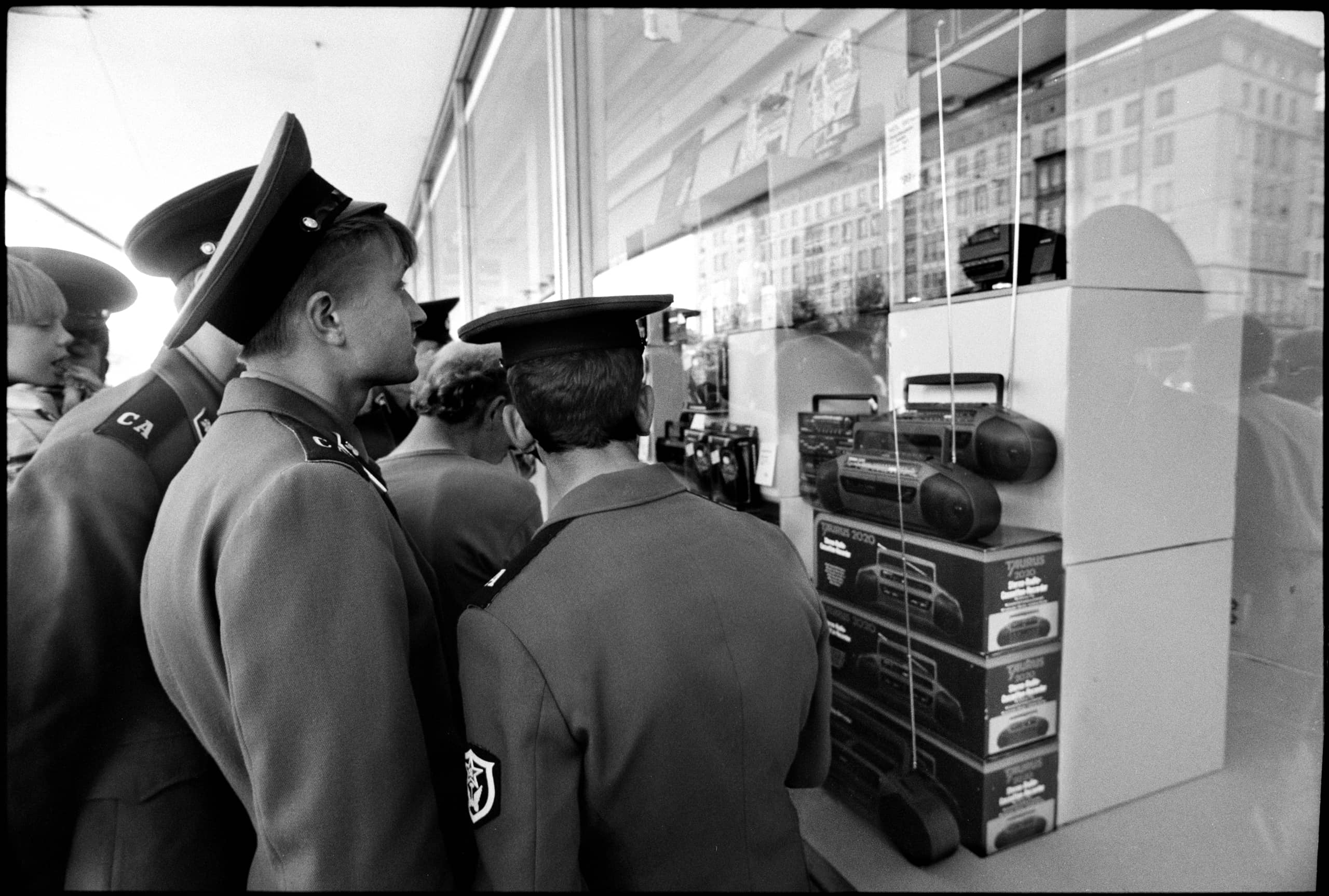
On 1 July 1990, the monetary union came into force, with the West German Deutschmark being introduced as official currency in the GDR, which still existed at the time. It changed the range of goods in GDR shops from one day to the next and also had a high symbolic significance for GDR citizens, as it was equated with the West German economic miracle and prosperity. Together with STERN author Lisa Trunk, we were sent to Magdeburg as a well-rehearsed reporting team to follow the events there. We observed how the entire range of goods was exchanged in the Centrum department store over the weekend and how the shop windows were redecorated everywhere. July 1st was a Sunday, the banks were open to cope with the rush of GDR citizens who wanted to exchange their Ostmarks for DM. People marvelled at the new displays in the shop windows in the city centre all day long. Russian soldiers from the Red Army also came and were particularly impressed by the range of Western consumer electronics on offer. For them, the sight was even more impressive given that, unlike GDR citizens, they had not had the opportunity to travel to the West since 9 November of the previous year.
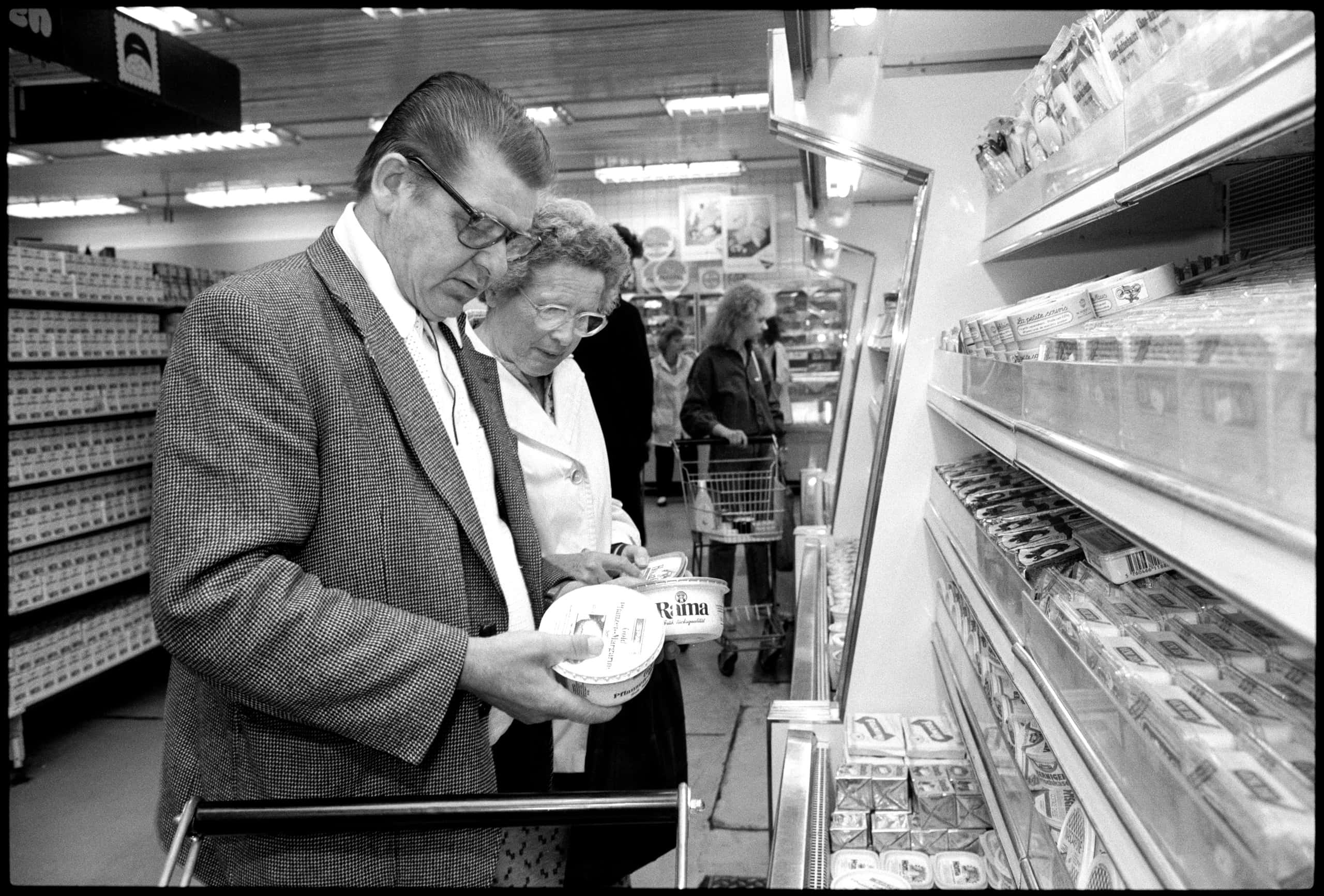
On Monday at 9 a.m., the Centrum department store opened its doors. A large crowd had already been waiting in front of it and then stormed the floors of the department store. The image of an elderly couple standing uncertainly in front of the Western range of goods in the grocery department, holding the various margarine pots in their hands in confusion and disbelief, symbolises the moment: Rama as the epitome of Western life. At the same time, one senses a not unjustified fear: what is happening to our lives so far? With the introduction of the Deutschmark, the demand for goods produced in the GDR suddenly collapsed, as customers preferred West German products. The decline of the GDR economy was further accelerated.


One final note: the pictures for this report were never printed. This was because of the production conditions at the time for STERN, which appeared on Thursdays, the image material had to be in Hamburg by Monday afternoon at the latest. And in the days of analogue photography, this meant that the films had to be delivered ‘by hand’ to the editorial office's laboratory. But on that Monday of the currency union, there was such an incredible traffic jam on the border between Magdeburg and Hanover that, despite all our driving skills, we didn't make it in time: When we finally arrived in Hamburg, the story had just gone to press – without my pictures. What remained for me was a letter from the then head of photography at STERN, who seemed very sorry: »I would therefore like to take this historic weekend as an opportunity to thank you very warmly and to tell you that the photos were definitely worthy of a double-page spread.« Well then...
Leipzig in the winter of 1991
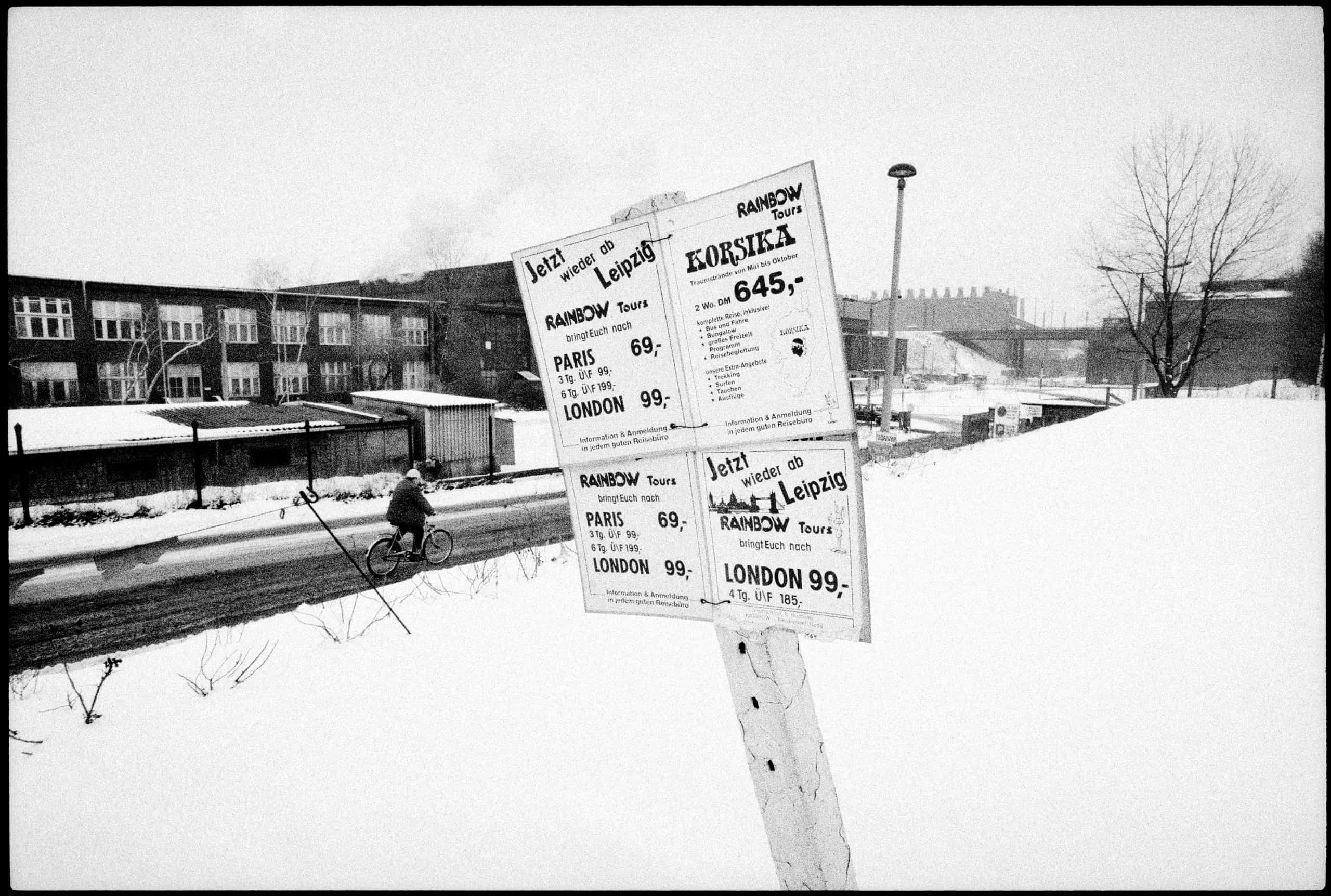
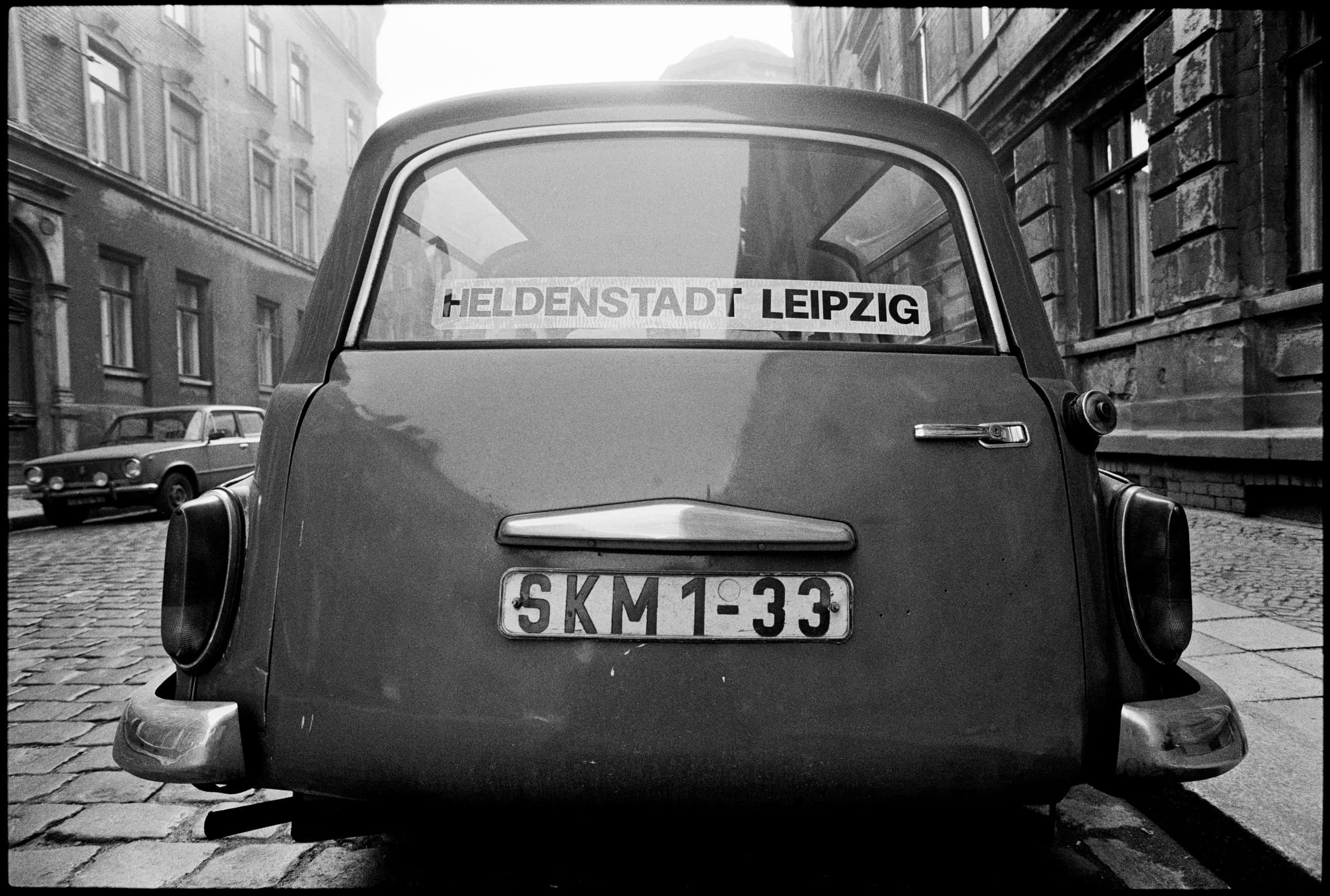
The euphoria of the fall of the Berlin Wall, the first free elections, monetary union and finally reunification had given way to a sense of disillusionment. The stripped-out skeletons of the Trabbis stood abandoned at the side of the road, while the Opel »Kadetts« were washed and polished.


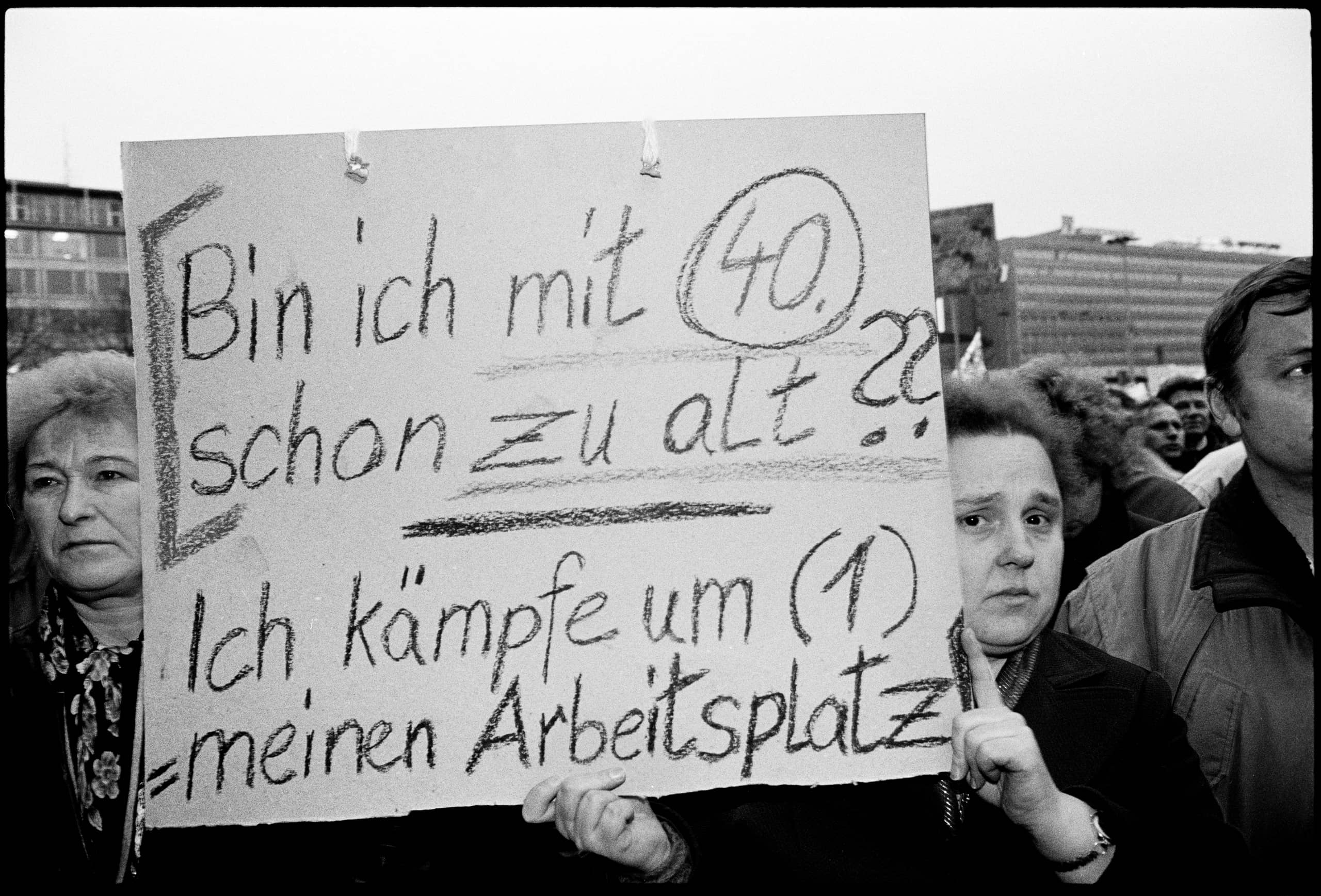
Rainbow Tours may be offering trips to Paris »now again from Leipzig for 69 marks«, but at the Leipzig Monday demonstrations, you can read placards such as »Unemployment? No thanks, Mr Kohl«. The old GDR flag with its hammer, circle and wreath of wheat is suddenly transformed into a symbol of resistance combined with the Palestinian scarf.

Series PEOPLE IN LEIPZIG, March 1991
After the many reports in the GDR and particularly in Leipzig in the last year and a half, I wanted to speak to people on the street and write down their stories when I visited in March 1991. To hear how they were doing, how they felt. I also took their portraits in square format in colour with my Hasselblad in front of a neutral wall that could be found somewhere nearby.

Hans-Joachim Krumpe, 61, a trained machinist, retired after illness: »Right next door is the WEST-BATH, which has been closed for months, supposedly for renovation. You can't even take a shower or a bath anymore. My pension is okay. But if the rent goes up, it won't be enough anymore. – I used to be able to go to the pub. I can't afford that anymore. I have to buy a bottle at the corner store and drink it alone at home. The fact that you're talking to me is a change from days of talking to myself! Talking to someone!«


Felicitas Neuber, 57, a graphic designer, unemployed, widowed: »I can't find my way around anymore. What will happen to the apartment? Where will I get the money for the rent? I hardly sleep anymore, I wake up at night.« She emphasises that she was never a member of the party. Now she lives on an early retirement pension of 500 marks. »Somehow it was better before. You had your work and your apartment.«
Heinz Leuschel, 53, a metalworker at BBG AG, the Bodenbearbeitungs-Geräte Leipzig AG in Plagwitz: »Tensions are getting worse and worse, between Germans. At some point there will be war. Every conversation with Westerners (he emphasises the word e-v-e-r-y) goes like this: you have to learn how to work first, we all started with 40 marks too, work first. – That hurts! After all, I have been working day in, day out in this company for 40 years«


Olaf Heun, 26, works as a caretaker in a police station. I meet him as he is cleaning his new blue Opel in front of the grey, dilapidated facades: »My job is pretty secure, but the 25,000 marks I paid for the new car are just about enough. There are still a few thousand left in installments.« He earns 1,000 marks, and his wife earns the same again. He is on holiday at the moment; yesterday they were »at the Poles. Now I have to wash the car. It's so dirty there. A real layer of dirt.«
Walter Müller, 75, pensioner, trained plumber. He invites me into his two-bedroom flat, where he lives alone, his wife is in a retirement home. He only lives in the kitchen, which is easier. While I'm there, an extremely unsympathetic Swabian antiques dealer arrives to search the flat for anything of value. To get into the living room, you first have to push aside a pile of junk to even open the door. The dealer waits with the deal until I'm gone.


Gerd Mühlmann, 54, warehouse worker, four children, unemployed for 1 year. The company he worked for made cardboard boxes. It has gone bankrupt. He does the maths for me: His eldest son is 22 and also unemployed. He gets 350 marks in benefits, his wife 400 marks in pension, his son 350, and then they still have child benefit, three times 90, that's 270 marks. That makes 1320 marks a month for the family of five. »I'd rather have staye over there,« is his dry comment.
Annett Sander, 20, slaughterhouse processor. She still has work. But she is afraid that many are already »set to zero«.
10 years since the fall of the wall
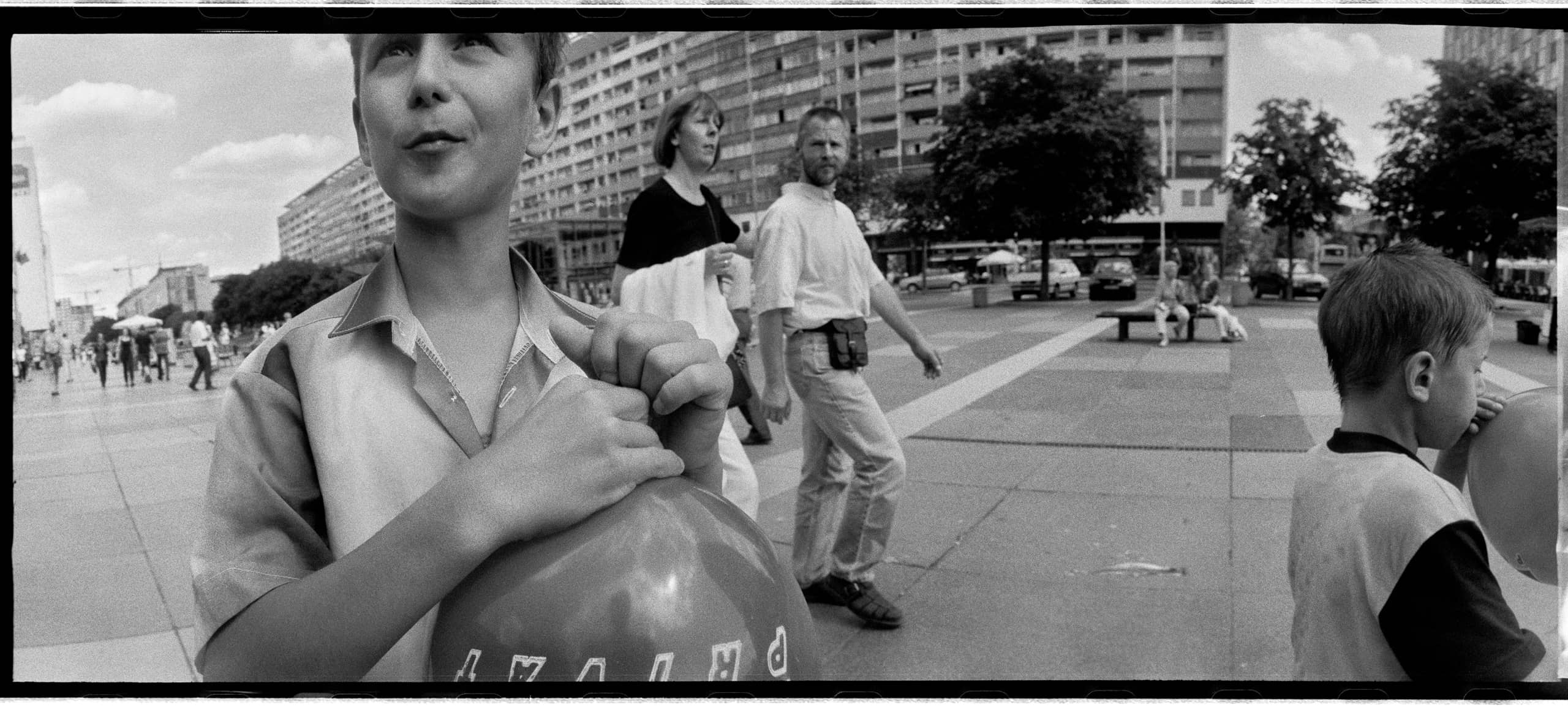
In the summer of 1998, I travelled once again through the so-called new federal states to view a possible project for our Bilderberg photography group: 10 years after the fall of the Berlin Wall.
Compared to the years after reunification, I found it very difficult to find a way in. It was as if something special, the identity, was in danger of being lost: the pedestrian zones of the cities were paved with the same stones as in the West, the car parks of the Lidl supermarkets looked exactly the same and the lights of the Shell petrol stations shone at night in the same colours as in the west.