»Daniel« Grosu Ion Doru
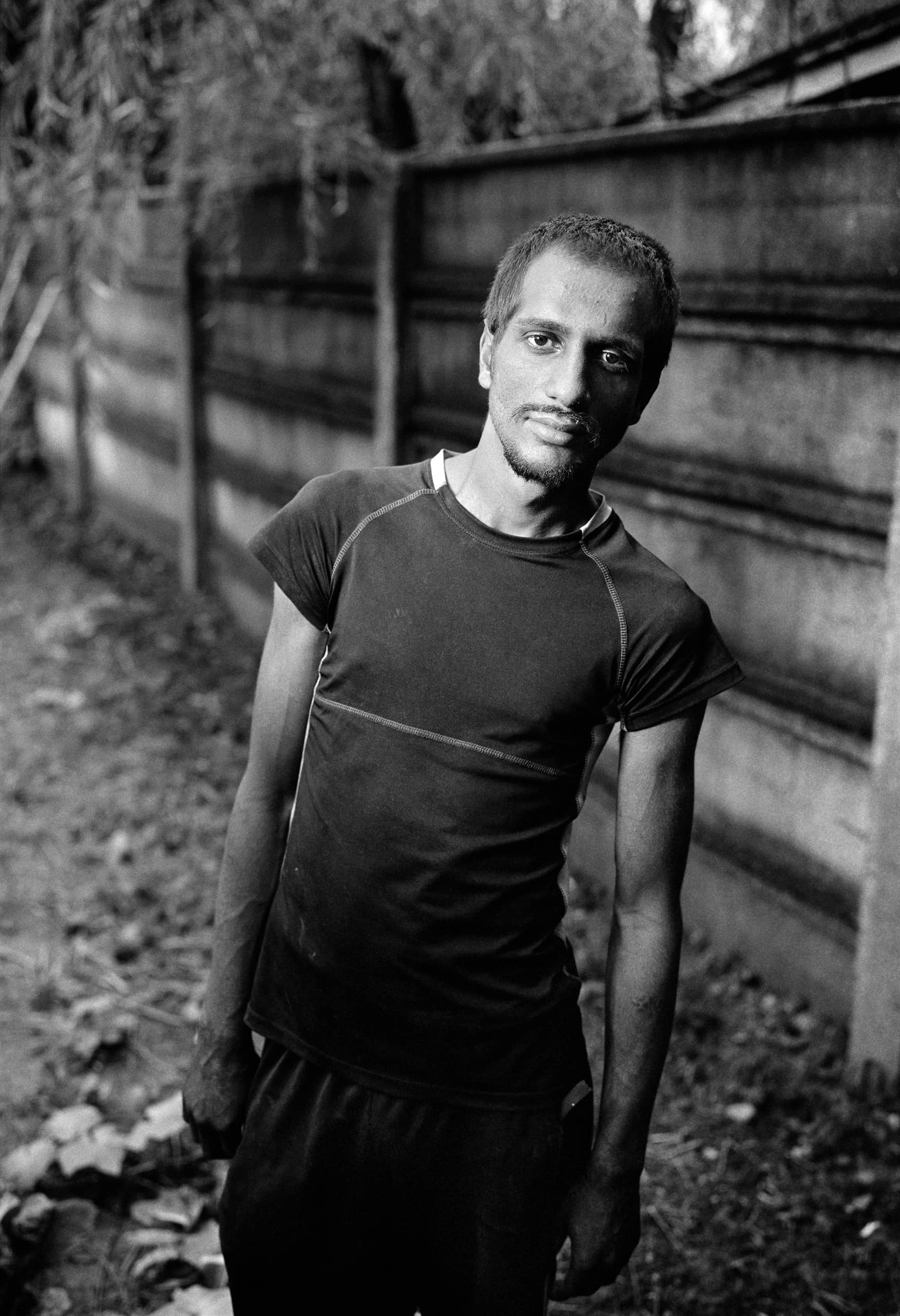
»Daniel« Grosu Ion Doru, 19, Onesti, Romania:
Street children in Romania. A story which was being reported in the papers 20 years ago, right after German reunification. I thought it was a thing of the past. Quite the contrary. Saskia Verdoes, a Dutch social worker, explains to me: "In the smaller cities, like here in Onești, it has become a growing phenomenon over the last few years. The cause is no longer Ceaușescu's failed family policy, as it was 25 years ago. Today, the main cause is the parents' absence when they move west to earn money." Three times a week the children can come to the OAZA social centre, have breakfast, shower and have their clothes washed. They come early in the morning. They are more or less clean. And they wolf down one plate of stew after another. They have had nothing to eat for days.
Daniel, 19, Onești: Grosu Ion Doru is 19. Here at the Centrul Social OAZA in Onești, everybody just calls him Daniel. Daniel is a »street kid« and a glue sniffer. He has been doing it for four years, ever since he ran away from his children's home and started living on the streets of Onești. The glue is called Prelandez, a strong household glue, but cheap: 3 leu for a small bottle. But it only lasts for two hours. Daniel needs five bottles a day. »And three more at night,« he adds. That is all he lives for. »What would you consider a good day?« I ask. »Enough money for enough Prelandez,« is his immediate answer. »You don't feel the hunger, you don't feel the cold, you forget all your problems.« Daniel is Roma. His mother died of cancer when he was just one month old. His father went to work in Spain, and Daniel was taken into care. That is, until he ran away at the age of 15 to his brother's place in Onești. His brother, however, was not able to look after him either. Daniel ended up on the streets and the other boys taught him the best way to forget his problems. I ask Daniel what his life's dream is. He thinks for a moment – well yes, to come off the glue. Then he would like to have his own home. A wife, children – a family. And what would his dream job be? – »Car washer«. Yes, that would be his dream. His brother does that too.
But Saskia, the social worker, does not think that is realistic. She says the children are hooked like heroin addicts. Glue destroys their health, their brain, their organs, everything. Of course, Daniel wants money in return for me taking his portrait. I explain to him that I will pay him a generous fee, but I will give the money to the OAZA centre. That way they would be able to give everybody here breakfast next week, too. To start with he doesn't like the idea at all. When I explain how proud he could then be that he would be earning money for everybody here, I see a glint of dignity in his eyes for the first time. He tries extremely hard to hold out through the portrait session. He finds it so difficult to concentrate on me and my camera for ten minutes. But he manages it, and Saskia is amazed. Afterwards, everybody has to rush off. They have been here for two hours already and desperately need another hit. They run off. Towards the station. Towards the glue.