Lella Pennisi with her son Okada Buluma
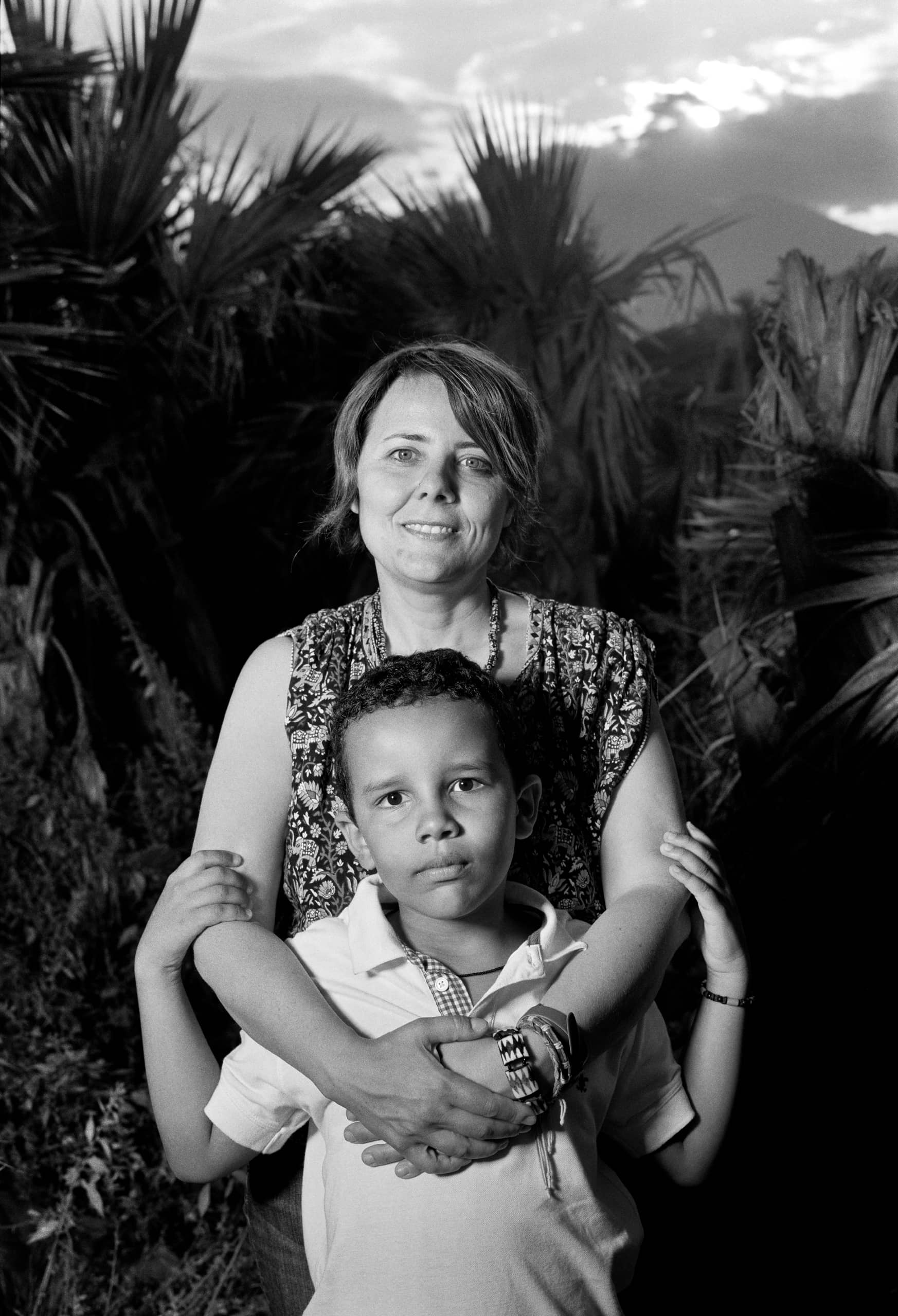
Lella Pennisi, 42, with her son Okada Buluma, 7, Acireale, Sicily:
For years, Lella has cared for African women stranded in Catania as refugees. Nigerian women, often victims of prostitution. That experience took her to Kenya for the first time, where she looked after street children. That was where she met her Kenyan partner. Now back in Sicily, she is temporarily on her own with their son Oki. Lella tells me how difficult it is to live in Sicily as a single mother with a mixed-race child – with a traditional understanding of parental roles still dominating. People would talk, and even at school they didn't know how to deal with a black child who was not a refugee. For the last four years Lella had been working for a nearby private aid organisation that provided accommodation for North African refugees. But she had carefully come to the decision to resign from her job as she learned about the organisation's business set-up.
She hadn't been paid in ten months, and by the end they didn't even have enough money to buy food for the refugees. She says almost €10 million went missing. She wonders where all the EU money went. »Immigrants are a very big business!« she says, disillusioned. In the largest refugee camp in Mineo, the business really pays off: facilities receive a daily rate of €35 per head. With 4 000 refugees, that amounts to more than €50 million per year for this one reception centre alone. A snippet – now famous right across Italy – from a police-intercepted telephone call with a Mafia boss is being linked by investigators to the refugee centres in Sicily: »Hopefully even more refugees will come to Italy next year... you can make more money with refugees than with drugs.«